Active prototypes
Mechanical Whale
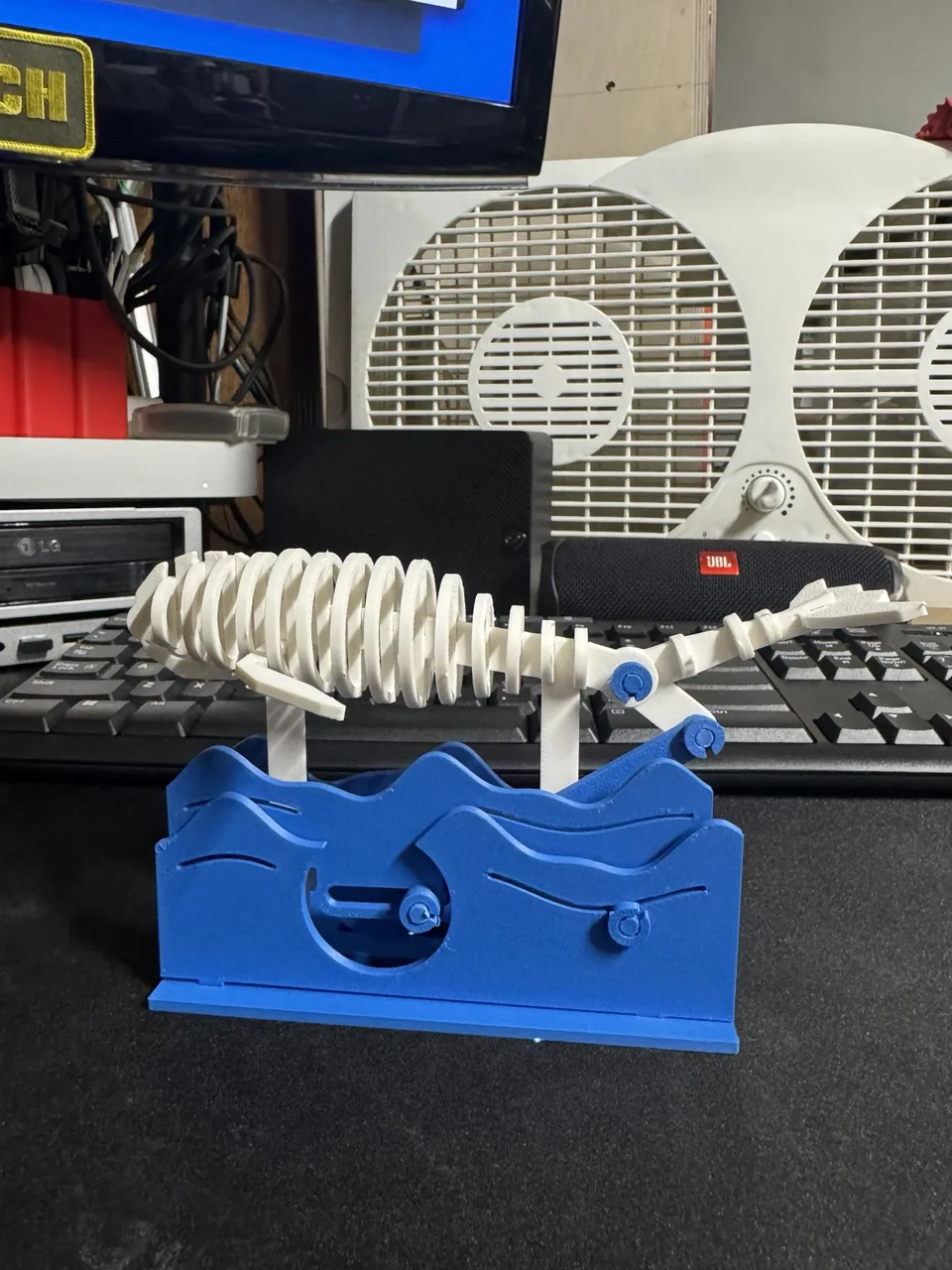
A hand-cranked skeletal whale with moving waves, now in the v0.5 display build with a platform and nameplate. Physical tests are refining fit, spacing and assembly.

September 16 v0.5 display build. AI cleaned the background for presentation; fine details may differ. The original photograph and mechanism footage below are the build evidence.
v0.5 and earlier v0.4.1 · September 2026
From printed parts to motion.
The latest mechanism close-up, followed by the earlier motion and assembly recordings. Press Play to load a clip.
Inside the v0.5 mechanism
Earlier v0.4.1 motion
Earlier v0.4.1 assembly
Inside the project
A whale that moves—and teaches through every revision.
- Print and compare fit tests
- Assemble the three cards
- Adjust and test the mechanism
- Document a repeatable build
Where it started
The idea was a kit that becomes a moving sculpture: printed parts, a visible skeleton, and a hand crank that brings the whale and its waves to life.
What took shape
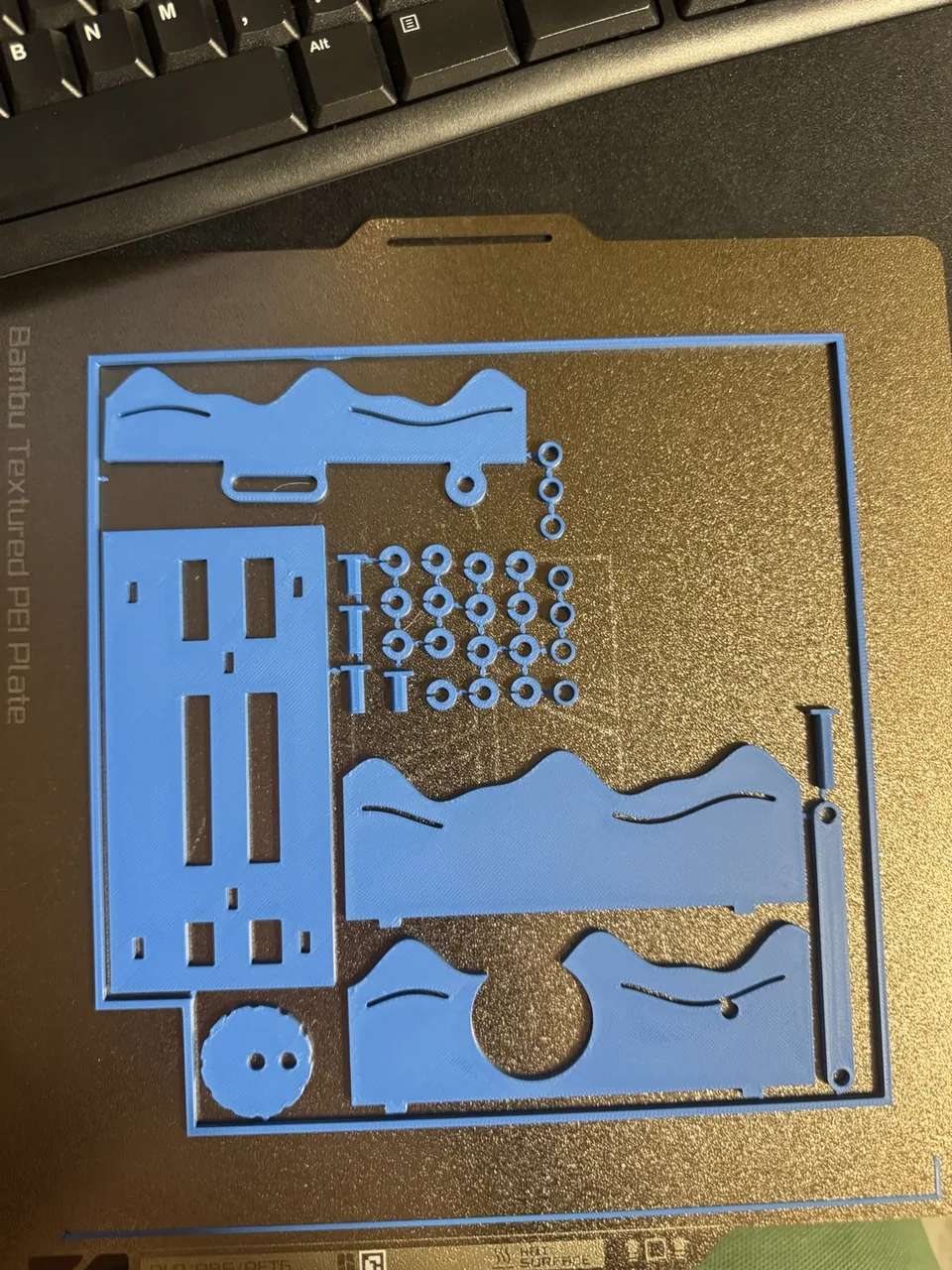
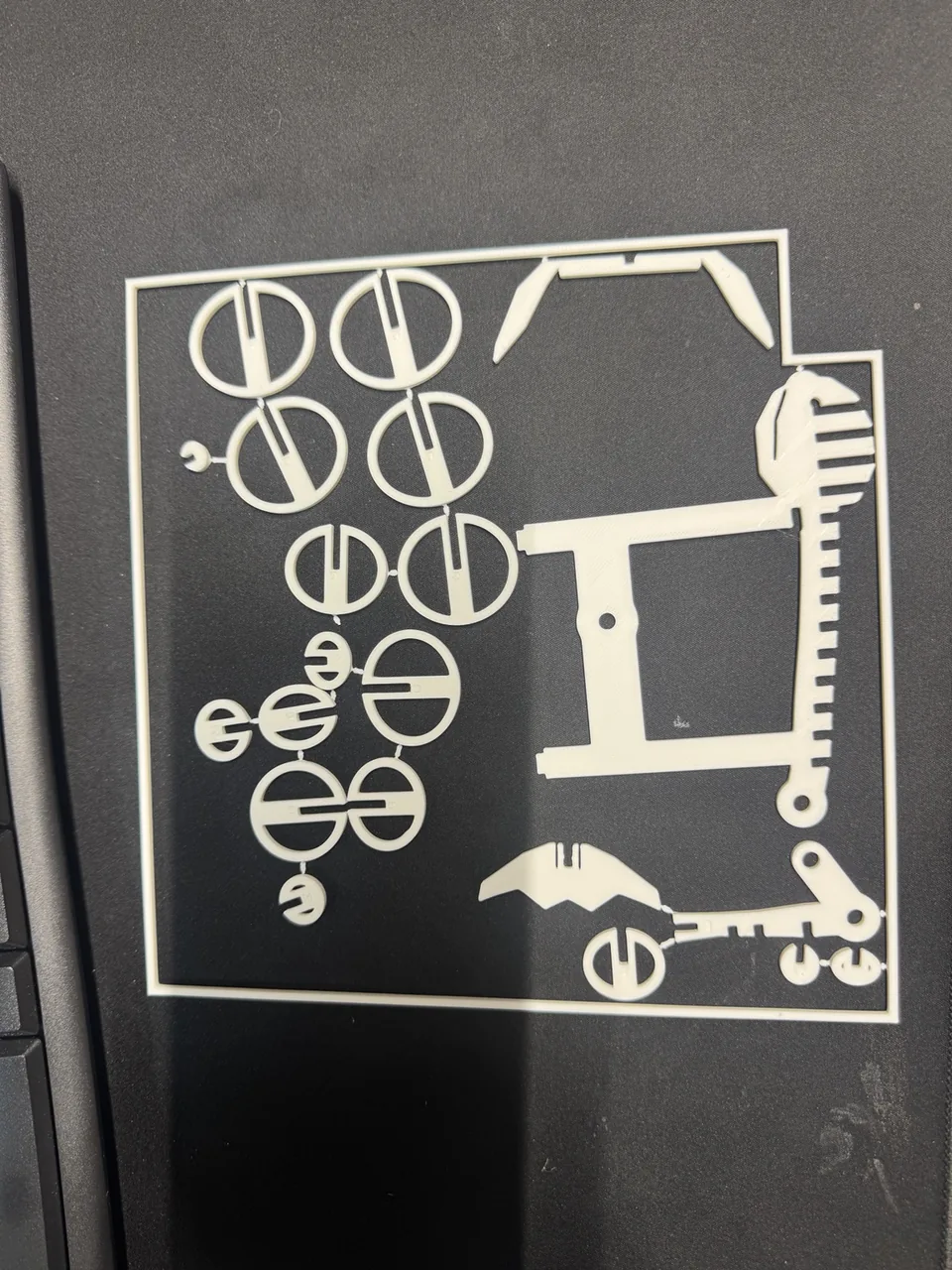
The three-card v0.5 build adds a display platform, an Olsen Automation plaque and more body detail. Smaller snap-pin lips and the selected base and brace fits came from physical test pieces. A supplied Bambu Studio screenshot estimates 6 hours 2 minutes and 158.37 grams for the three plates; these are slicer estimates, not a measured production run.
What the work revealed
Brian found that tightening the wave stack too far caused the moving panels to collide. Leaving clearance and aligning the two shafts let them pass. Hinge-cover ribs and the end clip still needed small amounts of glue. The useful result is a working adjusted assembly—and a clearer account of what the next builder will need.
The next step
Make shaft spacing and clip retention repeatable, document the cutting and gluing steps, and test whether another person can assemble the kit from the instructions. Packaging and a small evaluation batch are being explored; a public kit release has not been established.

Original September 16 v0.5 display photograph. Metadata removed; the model, framing and workshop background remain as photographed.

The moving stack after Brian adjusted its spacing. He reports that allowing clearance between the waves stopped their collision. Defined spacers are a proposed next correction.

A closer look at shaft retention. Brian reports using a small dab of glue on the end clip after setting the working clearance; improved retention remains under development.

The supplied three-plate slice estimates 6h 2m and 158.37g. This is planning evidence, not actual print duration, production cost or tested durability.

September 14 v0.4.1 presentation. AI cleaned the background; the original assembly photo and unretouched video provide the physical evidence. Fine details in this presentation edit should not be used for fit inspection.

Original September 14 photograph, with metadata removed. The exposed connections and assembly adjustments remain as photographed.

Brian’s side-by-side development comparison: older build on the left, newer build on the right. The original photo is retained without background retouching.

Earlier assembly presentation, retained as development history. AI was used to clean the background; this is not the September 14 v0.4.1 photo.

Earlier original assembly photograph. The September 14 v0.4.1 recordings above document a later build demonstrated in motion.

Brian reported that this hinge and collar printed well and moved successfully. That result applies to this component, not the full assembly.
Additional project notes and earlier references